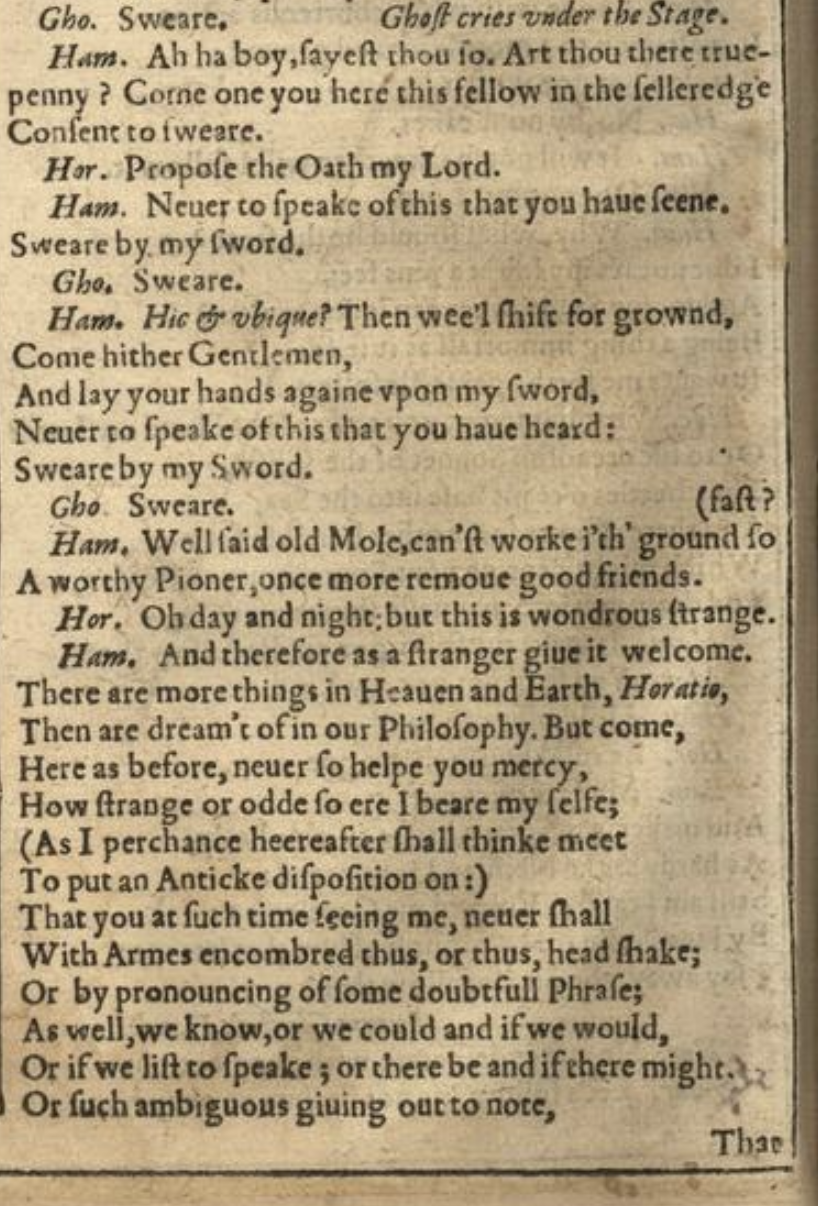
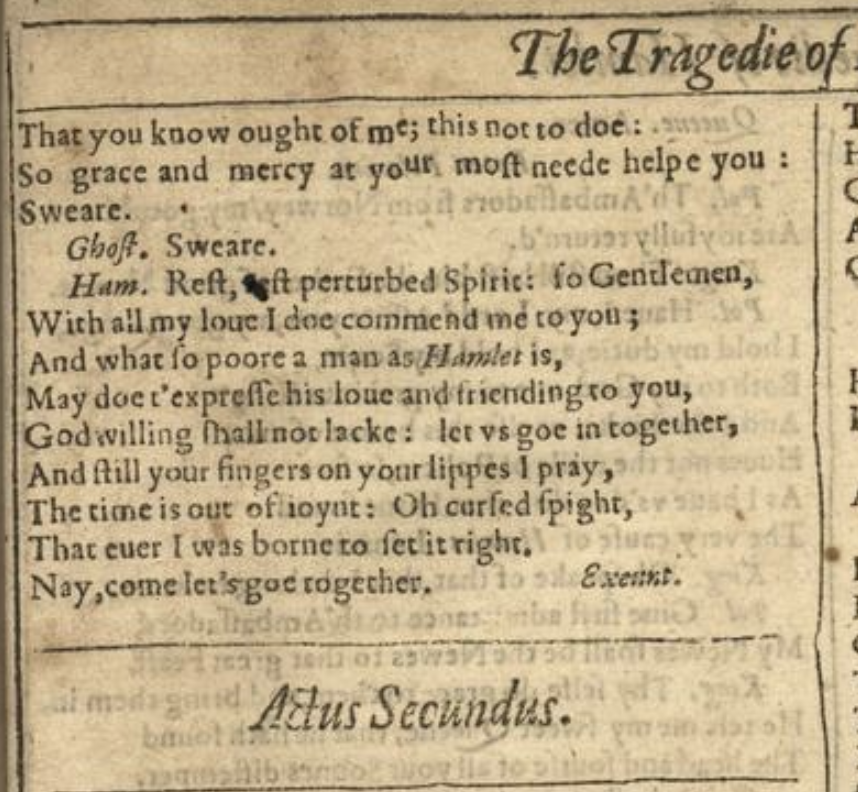
Printed by Valentine Simmes for Nicholas Ling and John Trundell in 1603, the First Quarto was unknown until a copy was discovered in Henry Burbury's closet in 1823. Half the length of Q2, Q1 lacks entire scenes and soliloquies and diverges quite significantly from the version people had come to know. Through time, scholars have come up with a number of theories concerning its provenance: Could it be a memorial reconstruction, an early draft, an abridged performance text? Evidence is still inconclusive.
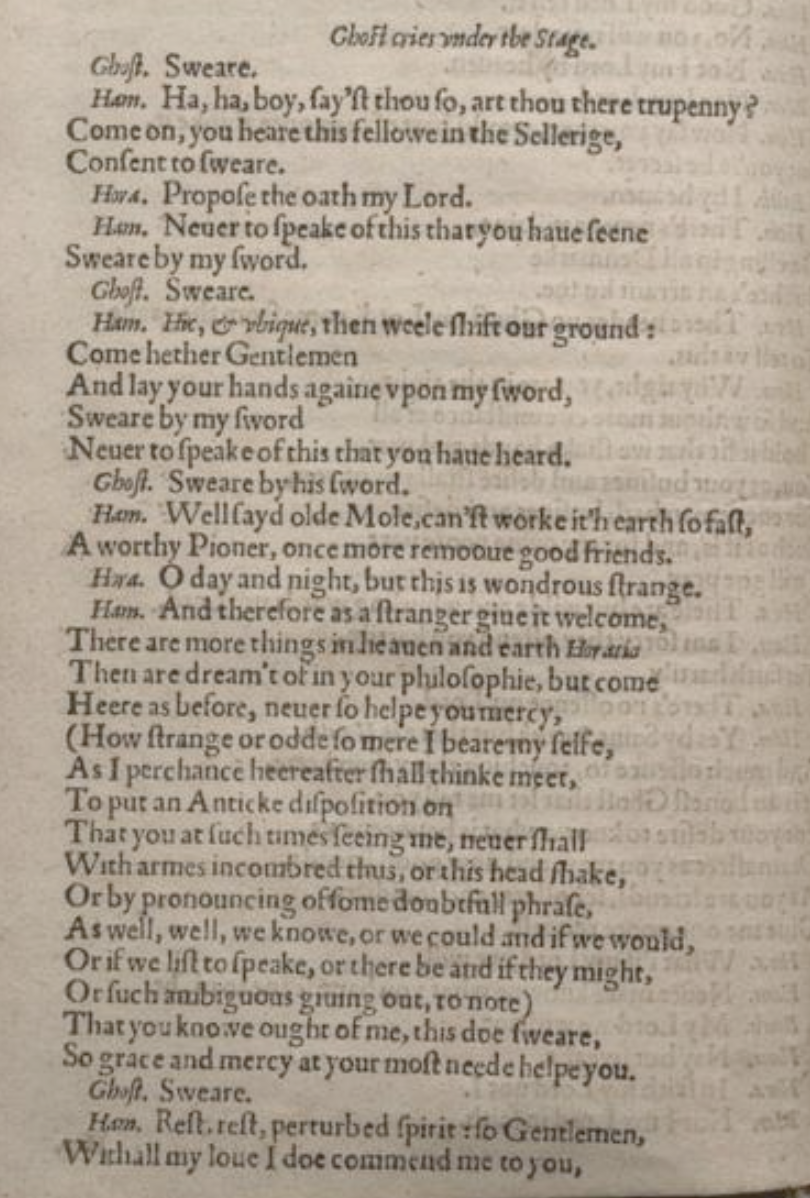
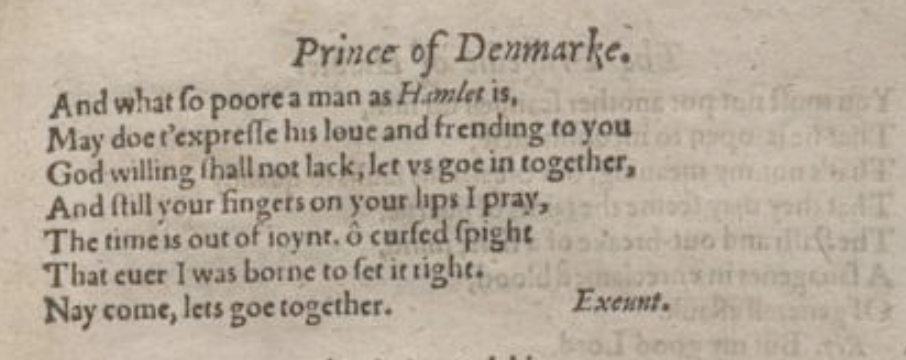
The passage from "Gho. Sweare" (TLN 845) through to the exit at TLN 887.
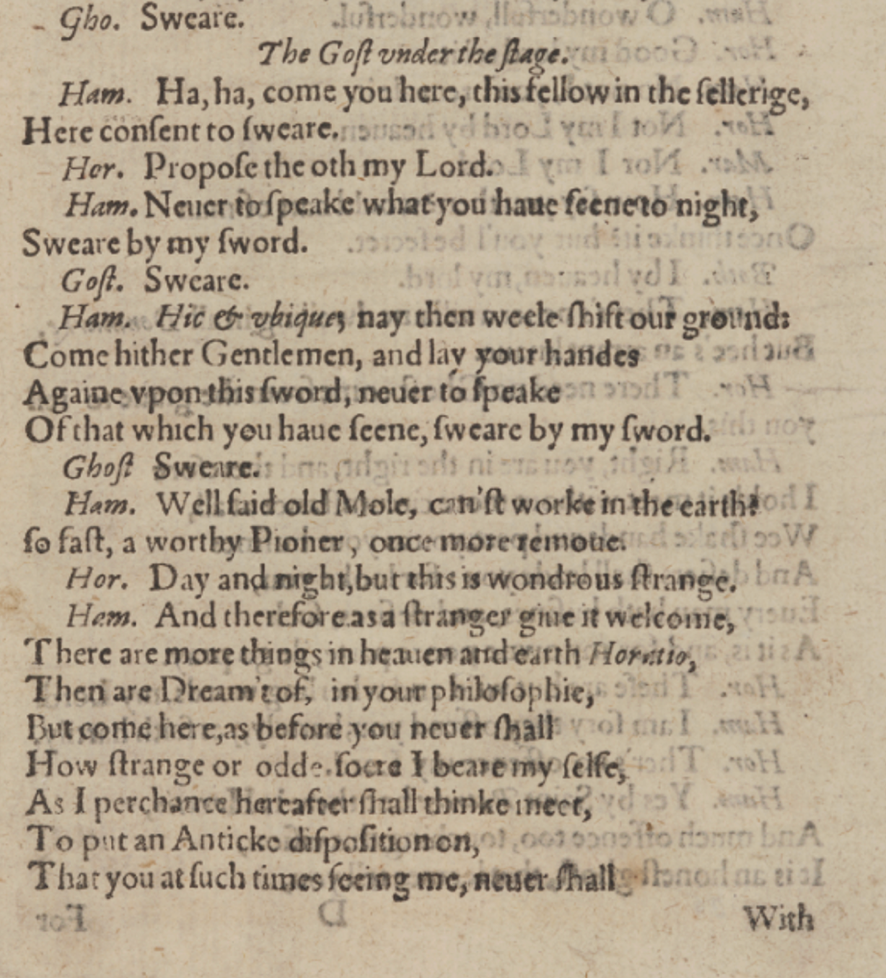
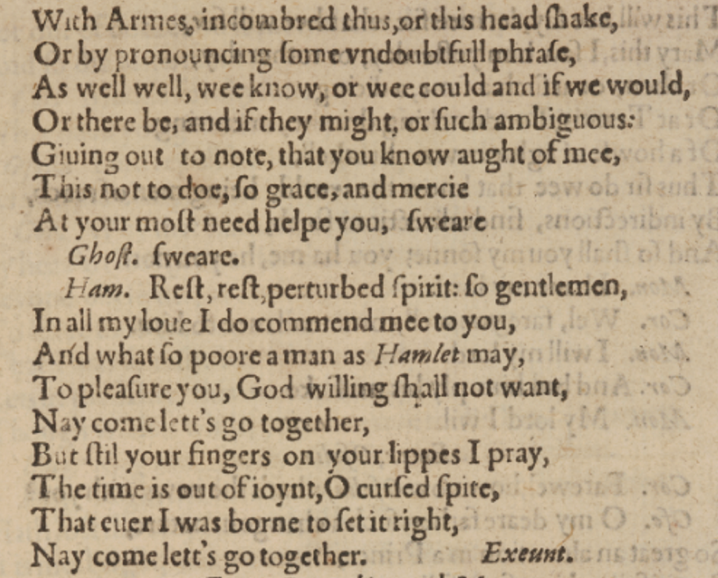
Printed by James Roberts for Nicholas Ling. Q2’s title page promotes it as "Newly imprinted and enlarged to almost as much againe as it was, according to the true and perfect Coppie."" At nearly 3,800 lines, it is the longest version. Some have argued it is likely set from Shakespeare's manuscript.
The passage spans two pages. First page shows the bulk of TLN 845–887; the second shows the transition into Act 2.
Published by Isaac Jaggard and Edward Blount, seven years after Shakespeare's death. Compiled by actors Heminges and Condell. Some Hamlet editors have suggested the Folio version may derive from an annotated copy of Q2, a theatrical prompt-book, or Shakespeare's "fair copy."
The passage spans two columns across two pages. Notice the running header "The Tragedie of Hamlet" and the distinctive two-column Folio layout.